
Why Antibiotic Resistance Affects Us All
Antibiotics have revolutionized medicine, both in human and veterinary medicine. However, the more frequently and indiscriminately they are used, the greater the selective pressure on bacteria—and thus the risk that resistance will develop and spread. Antimicrobial resistance (AMR) is therefore no longer just a problem for individual patients or specific medical fields. It is a shared challenge for humans, animals, and the environment.
What does “One Health” mean?
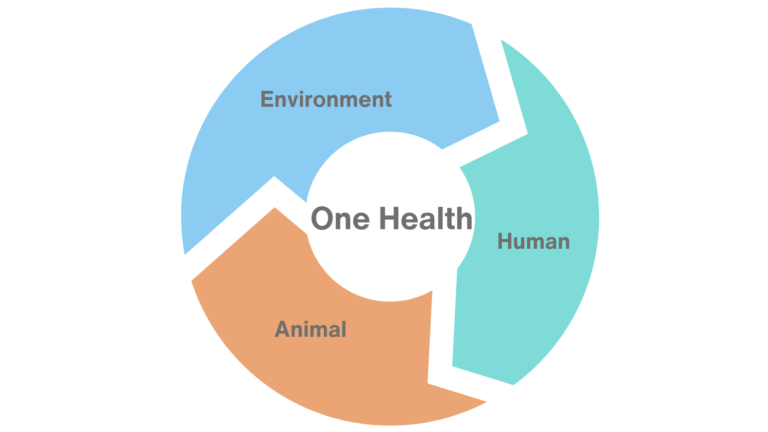
The One Health approach views the health of humans, animals, and the environment as interconnected. Diseases, microorganisms, and drug-resistant bacteria do not stop at the boundaries between these areas.
Humans and animals live in close proximity. They share their environment, come into contact with the same surfaces, and, in some cases, the same microorganisms. At the same time, environmental factors such as wastewater, soil, or the spread of antibiotic residues and resistant bacteria can influence the development and spread of resistance.
How Does Antibiotic Resistance Develop?
Bacteria can become resistant to certain antibiotics through genetic changes or by acquiring resistance genes.
Selection pressure plays a crucial role in this process: When susceptible bacteria are killed by an antibiotic, resistant bacteria can survive and continue to multiply.
However, this does not mean that every course of antibiotic treatment automatically leads to resistance. Antibiotics are important and, in some cases, life-saving medications. What matters most is using them in a targeted manner and according to the indication.
This is precisely where antibiotic stewardship comes in.
Why Does Veterinary Medicine Play a Role?
Pets are part of our community and thus also part of the One Health system. They can carry certain bacteria and exchange microorganisms with humans.
At the same time, veterinary medicine itself relies on effective antibiotics. The responsible use of these drugs is therefore not only in the interest of controlling resistance but also in ensuring the long-term viability of veterinary care.
Antibiotic stewardship does not mean using antibiotics as infrequently as possible. Rather, it means using them only when they are actually needed—and selecting the appropriate medication, the correct dosage, and the appropriate duration of treatment as precisely as possible.
One Health doesn’t start with antibiotics
Antibiotic stewardship begins even before the decision to prescribe an antibiotic is made.
Accurate diagnosis, hygiene, wound management, treatment of underlying conditions, and appropriate local care can help prevent infections or support their management.
For superficial local issues, for example, local antimicrobial therapy can be part of the treatment plan. This allows treatment to be more closely tailored to the actual clinical findings.
HOCl as a Component of Local Care
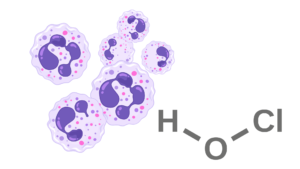
Hypochlorous acid (HOCl) is a component of the body’s natural nonspecific immune defense. Under physiological conditions, neutrophils produce HOCl as part of their defense response against microorganisms.
This antimicrobial effect also makes HOCl suitable for local application. Depending on the product and indication, HOCl can be used, for example, for cleaning and treating wounds, as well as for the local care of the skin, ears, eyes, oral cavity, or prepuce.
It is important to note that local application of HOCl does not replace necessary antibiotic therapy. In cases of deep, severe, or systemic infections, as well as when clinical findings indicate such conditions, further diagnostic evaluation and, if necessary, systemic therapy are required.
What can each individual do?
At first glance, One Health sounds like a concept for large organizations, hospitals, or research institutions. In reality, however, it also begins in everyday clinical practice.
For veterinarians, for example, this means:
- Prescribing antibiotics only when medically indicated
- Conducting targeted diagnostics whenever possible
- Making sensible use of local treatment options
- Consistently implementing hygiene and preventive measures
- Informing pet owners about the responsible use of antibiotics
- Avoiding unnecessary or repeated courses of antibiotic treatment
One Health: A Shared Responsibility
Antimicrobial resistance cannot be viewed in isolation within human medicine, veterinary medicine, or the environment. It arises and spreads within a complex system in which these areas are interconnected.
One Health therefore does not mean dividing responsibility between human and veterinary medicine. It means taking responsibility together.
The conscious use of antibiotics, accurate diagnostics, and the implementation of appropriate preventive and local measures can help preserve the long-term effectiveness of important antimicrobial agents.
After all, antibiotic stewardship is not just a matter of today’s treatment—it is also a matter of tomorrow’s medicine.

Quellen:
WHO/FAO/UNEP/WOAH – Quadripartite guidance on One Health integrated surveillance of AMR and AMU (2026)
WOAH – Responsible and prudent use of antimicrobial agents in veterinary medicine
Jin et al. (2023) – Evidence for the transmission of antimicrobial resistant bacteria between humans and companion animals
Daireaux & Nobrega (2026) – Antimicrobial resistance in companion animals: trends, threats and takeaways